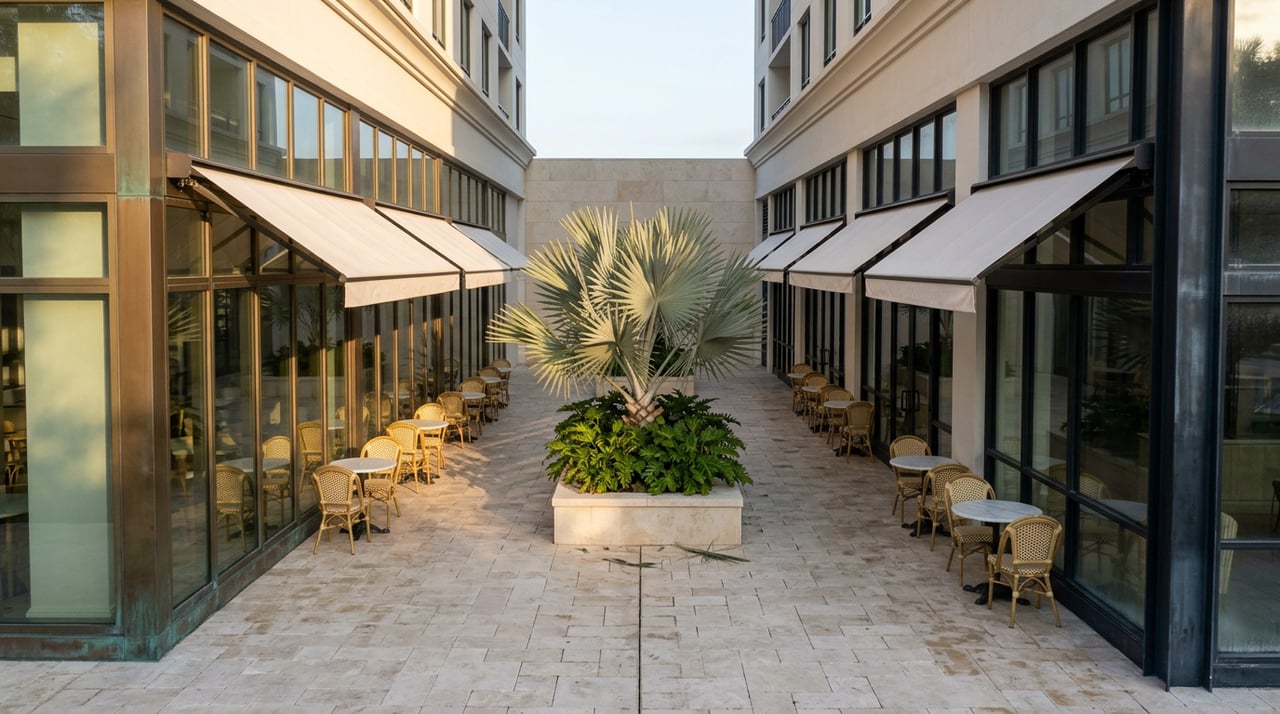
Ten days ago, on September 3, a small crowd gathered outside 270 East Flagler Street for the grand opening of Pho Nam, the new noodle shop from the team behind Tâm Tâm. Order a bowl there tonight and you'll sit on a wide, curbless sidewalk with room for the tables to spill outward, the kind of streetscape Flagler hasn't had in most of a century. Walk two blocks west toward Miami Avenue, though, and the sidewalk narrows, the pavers stop, and the street starts to look like the version of Flagler that's been closed for construction since before some current residents moved downtown.
That's the part of the story that gets lost when people say Flagler Street is "back." It isn't back. Three of its five blocks are.
What actually reopened, and when
The Flagler Street Beautification Project has been under construction since 2021, a five-block remake of Miami's oldest commercial corridor that was supposed to take months and instead took years, slowed by the pandemic, aging infrastructure under the road, and a contractor dispute the city didn't resolve until early 2026. The project is split into named sections, and each one has opened on its own schedule rather than all at once.
The easternmost blocks, closest to Biscayne Boulevard, were the first to reopen to vehicle traffic. By March 2026, the city had extended that all the way to Northeast First Avenue, a milestone Mayor Eileen Higgins marked in person, noting the project had also let the city reroute bus lines that had been diverted through downtown for years. At that point, two stretches remained on the city's own timeline: a section from East First Avenue to Miami Avenue, projected to wrap by June, and the final stretch, from Miami Avenue to West First Avenue, which was still waiting on a general contractor with no start date set, pending sign-off from the city's bonding company.
In practical terms: if you're walking Flagler between Biscayne Boulevard and Miami Avenue, you're on finished or nearly finished street. Wide sidewalks, curbless pavers, room for outdoor seating. West of Miami Avenue, you're in a corridor that's been under some form of construction for the better part of five years, with no announced restart date.
The businesses filling in the finished blocks
The new sidewalk width is why Flagler St. Bakery could open the way it did. Owner Julian Gheiler had been running a Sunday pastry pop-up outside Over Under for months before opening a permanent shop at 12 Northeast First Avenue on August 7, right at the edge of the finished corridor, and the bakery makes a point of being the only one downtown producing its pastries entirely from scratch.
Pho Nam is the newer addition and the one worth knowing about if you haven't been paying attention. Founded by chef Tam Pham and sommelier Harrison Ramhofer, the same duo behind the downtown favorite Tâm Tâm, it's built around Saigon-style noodle bowls, with specialty coffee and tea on the menu too, and it opened at 270 East Flagler Street on September 3. Both openings landed on the same finished stretch of Flagler, a few blocks apart. That's not a coincidence. It's the section of the street where a business can actually count on foot traffic and outdoor seating right now.
The weekend programming was a bridge, not a permanent fix
Once the eastern blocks reopened, the Flagler District Business Improvement District started funding "Weekend on Flagler," a run of Friday-through-Sunday events with live music, comedy, and fashion shows aimed at pulling people back to a corridor that had spent years looking like a construction zone. BID executive director Terrell Fritz told CBS News Miami it had been rewarding to watch residents and visitors return to Flagler after five years of construction. The funding was secured through Memorial Day, this past May.
It worked, at least on weekends. Rocio Cano, a master barber at Bespoke BarberPub, said the difference in walk-in traffic was immediate. But the recovery hasn't been even. Daniel Cohen, who owns Sneak Peek Luxury on Southeast First Avenue just south of Flagler, pointed out that his intersection stayed closed until February and asked organizers to make sure businesses further from the main stretch weren't left out of the attention the events were generating. Longtime merchants told the same reporters that the weekend crowds hadn't yet turned into steady weekday sales, and that the corridor still needs consistent outreach if the bounce is going to last past a few busy nights.
There's also an unresolved piece of the puzzle that matters if you're the kind of resident who wants a drink on a sidewalk. Business leaders on Flagler have asked the city to change the zoning code so that businesses selling alcohol can operate street cafes on the new sidewalks. That request hasn't been resolved. The infrastructure for outdoor dining and drinking exists now. The zoning to actually use it that way, in full, doesn't yet.
If you're planning a night on Flagler this week
- Biscayne Boulevard to Miami Avenue: finished or nearly finished sidewalks, room to sit outside, and where Pho Nam and Flagler St. Bakery have both landed.
- Southeast First Avenue, just off Flagler: open again as of February, home to longtime shops like Sneak Peek Luxury and Bespoke BarberPub that spent years absorbing the construction slowdown.
- West of Miami Avenue: still waiting on a general contractor as of the most recent city reporting. Expect this stretch to look and feel like a job site rather than a finished street for a while longer.
What this means if you live down here
The honest version of this story is that Flagler's revival is real, but it's geographic. If your daily walk keeps you on the eastern third of the street, you're already living in the corridor the Downtown Development Authority has been promising for five years. Curbless blocks, room for pop-up markets, actual restaurants worth walking to instead of driving past. If your errands take you further west, you're still waiting, and there's no firm date yet for when that changes.
Worth watching over the next few months: whether the Flagler BID's approved pilot program to periodically close portions of the street to cars for markets and performances gets scheduled now that the weather's turning, and whether the city names a new contractor for the final stretch west of Miami Avenue before the year is out. Both would tell you a lot about whether this finishes as a full corridor or stays a partial one with a construction tail.
For now, if you want to see what Flagler Street was supposed to become, walk it east of Miami Avenue on a Friday night. If you want to see why some of the merchants who've been here for years are still cautious, walk it west.
If you're weighing what a changing block like this means for property values or timing a purchase or sale downtown, that's a longer conversation, and one worth having with someone who tracks these corridors closely. Swann Realty has been watching Miami's urban core evolve block by block. Schedule a Consultation if you'd like to talk through what it means for your own plans.